
2022-2023
Fate of the Forests under Fires
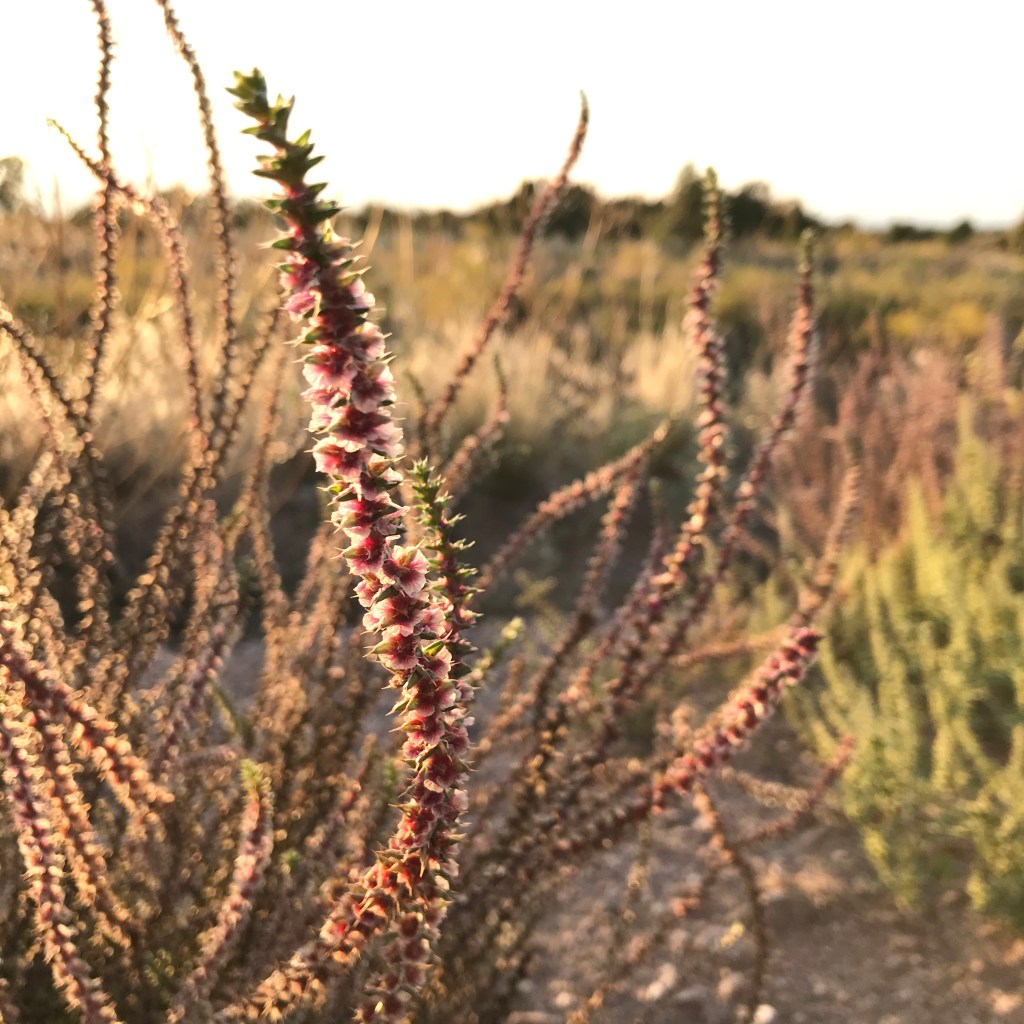
Wild fires are becoming more extreme with ongoing climatic change. How will forest species composition, structure and function shift under novel fire regimes, while being simultaneously faced with other climate change stressors such as droughts? Some of these novel, no-analog scenarios are perhaps best simulated in-silico with physically-based models. To enable this experimental capacity, I developed a code linking a fluid dynamics-based fire model, named QUICFire, developed at LANL, to a dynamic global vegetation model, named the Functionally Assembled Terrestrial Simulator, aka, FATES. FATES’ next-generationalism lies in the quality that it is a cohort-based, disturbance-tracking demographic vegetation model in which tree communities are not prescribed, but assemble from first principles: based on plants’ physiological tolerances and plant competition [trait-trait and trait-environment interactions]. This allows forest communities in FATES to shift in response to changes in climate or fire regime. FATES is run as part of a Land Surface Model (ELM, or CLM), and thus also allows for understanding impacts of the shifts in forest composition onto other ecosystem services such as water cycling.
This work is supported by USDoD SERDP.
2023-ongoing
Drought Resilience of Tropical Forests
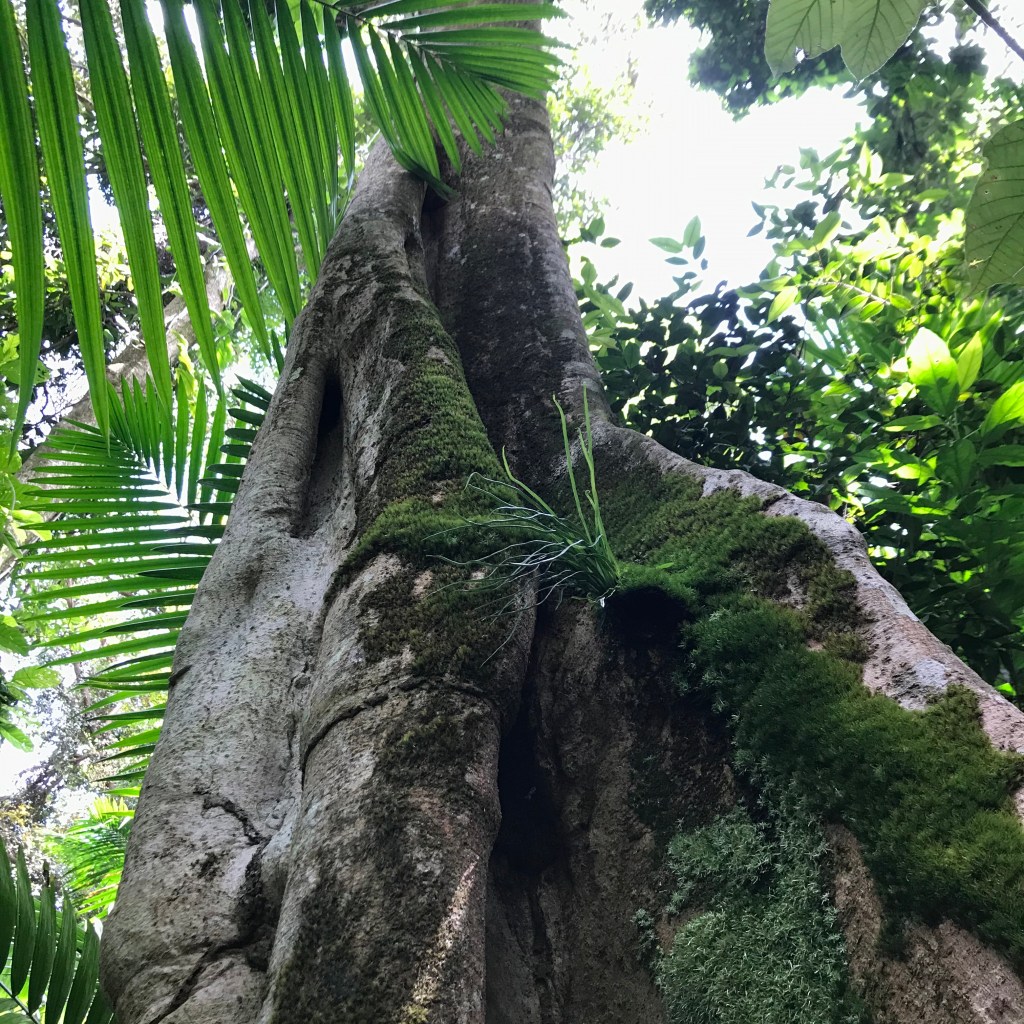
Tropical forests, for one, cover only 7% of Earth but cycle more carbon, water and energy than any other biome, thus playing a major role in regulating the global climate. However, tropical forests are complex, diverse, historically understudied [colonized], which makes it challenging to figure out their vulnerabilities and resilience to climate extremes such as droughts and, thus, the future climate on Earth.
In the same forest, trees may or may not experience a drought depending on how deep their roots are located in the vertical soil profile and the extent of water availability along that profile. We developed an inverse model of trees’ species-specific water-sourcing depths, informed by plant-physiology, hydrology and tree growth responses through droughts, and calibrated this model with isotopic signatures of water-sourcing depths.
We found that amongst common canopy trees of Barro Colorado Island, Panama, species sourcing deeper water were hydraulically more vulnerable. That is, should they experience water-stress, deeper rooted species were more likely to suffer embolism induced mortality risks compared to shallow rooted species. However, deeper water access safeguarded the hydraulically more vulnerable species from exposure to water-stress, resulting in their greater survival through several El-Nino droughts. Read more about this work in our article Chitra-Tarak et al. 2021. This work was amongst the top-downloaded article in the journal New Phytologist in it’s first year of publication.
We are currently testing this approach to assessing forest drought resilience at a core set of tropical sites with calibration-validation data. This work integrates a variety of interdisciplinary datasets and models, including hydrology, demography, plant-physiology, community and functional ecology, environmental isotopes and eddy flux data.
This work is supported by the USDOE’s flagship investment in tropical forest research, the Next-Generation Environmental Experiments-Tropics (NGEE-Tropics).
2023-ongoing
Fate of the Vegetation in the Arctic
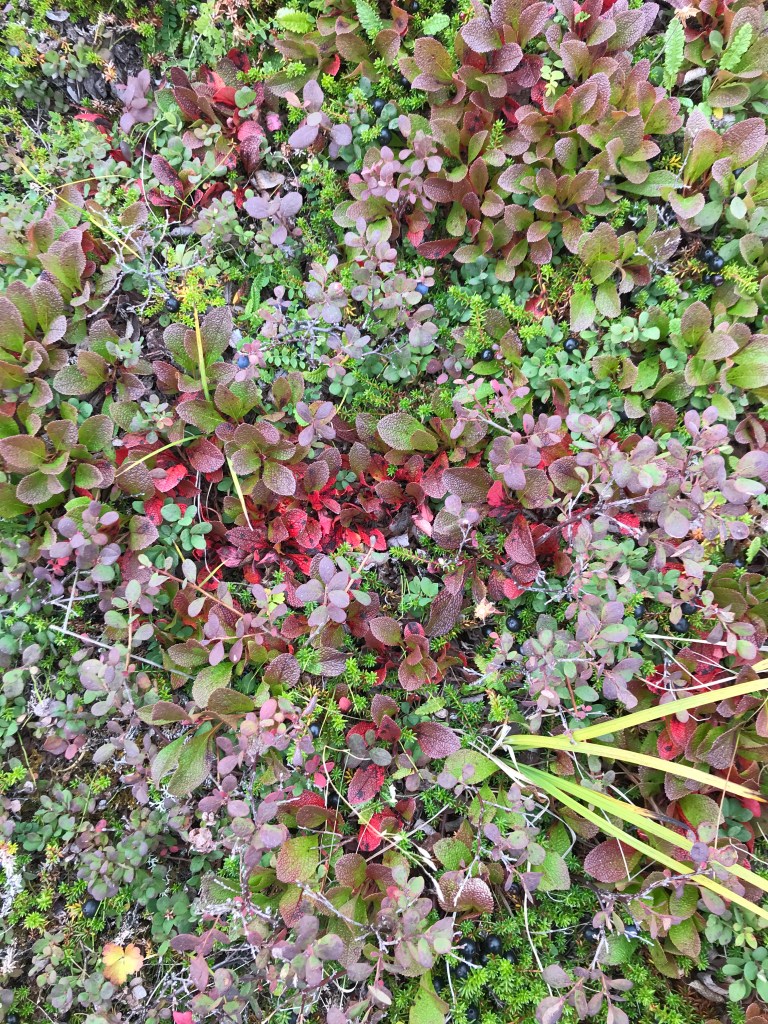
The arctic is warming at a faster rate than any other biome—nearly four times faster over the last two decades compared to the global average. How vulnerable is arctic vegetation to these changes and ensuing disturbances?
This work aims to advance the future projections of arctic vegetation using first principles of community assembly (environmental filtering, niche segregation and competition) and plant physiology with the vegetation model, FATES-the Functionally Assembled Terrestrial Simulator-hosted in the Land Model of the Earth-system Model E3SM.
This work is supported by the USDOE’s flagship investment in tropical forest research, the Next-Generation Environmental Experiments-Arctic (NGEE-Arctic).

2023-ongoing
Transition to Agro-Ecology amongst Marginalized Farmers in India
This is a voluntary project I am working on in collaboration with the non-profit, Dharamitra. It is personally meaningful to me as I get to work with my dad, Tarak Kate, and the story of my land, Vidarbha.
Read more about this topic at People’s Archive of Rural India.
2014-2018
The First Inverse Model of Trees’ Water-Sourcing Depths
This marks a much satisfying project from my PhD work, and is an outcome of an enjoyable collaboration with Laurent Ruiz of the Indo-French Cell of water Sciences, IISc, Bangalore.
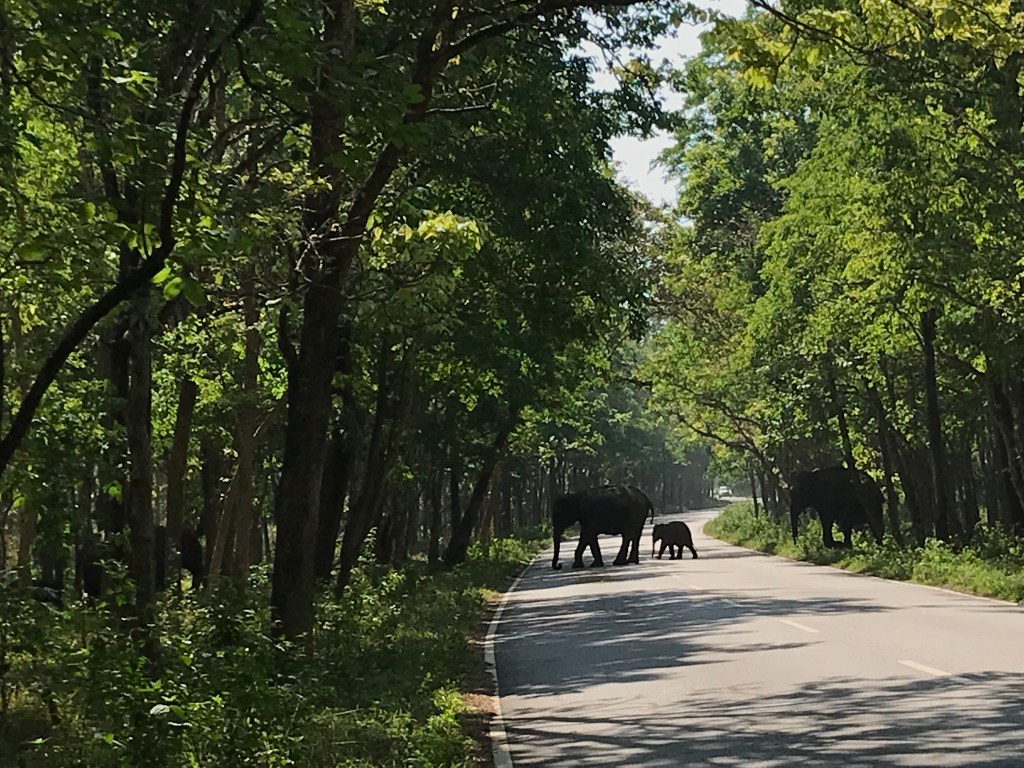
In a seasonally dry tropical forest, Mulehole Critical Zone Observatory (CZO) in Bandipur National Park, India, we used a numerical model informed by data to track moisture in the whole soil/weathered rock profile over which the forest draws its water for over decades. Here, during a rare, multi-year drought the deepest soil/weathered rock zone dried out and it took several years before it recharged, whereas the shallower soil zone went through frequent (annual/seasonal) wetting and drying cycles. Using long-term forest inventory data from the ForestGEO plot in Mudumalai National Park, we analyzed the rates of slowdown in tree growth of coexisting tree species as cues to inversely guess their water sourcing depths. This led to a surprising finding that trees dependent on deeper water sources suffered from greater mortality in the once-in-a-century type drought in 2012 than those relying on shallower water sources. Identifying such diverse survival and resource-use strategies among coexisting trees [deeper-rooted, less resilient, not-adapted-for-the-rare-depletion-of-a-reliable resource versus shallow-rooted, more resilient, adapted-to-a-fluctuating-resource] will allow us to predict resilience of this forest resilience under droughts.
For this work (Chitra-Tarak et al. 2018), I was awarded the British Ecological Society’s Harper Prize, for the best paper published by an early career researcher in the Journal of Ecology that year.
 Rutuja Chitra-Tarak